Explore visual arts
Visual arts encompass an extraordinary range of human expression, from ancient cave paintings to contemporary installations. Whether you’re standing before a masterpiece in a museum, considering your first art purchase, or wondering how to properly display a cherished piece at home, understanding the multifaceted world of visual arts enriches every interaction you have with creative works.
This comprehensive resource explores seven essential dimensions of engaging with visual arts: experiencing art in institutional settings, preserving works for posterity, building meaningful collections, understanding psychological responses to art, organizing exhibitions, interpreting artistic intent, and integrating art into living spaces. Each dimension requires specific knowledge, yet they all interconnect to form a complete understanding of how we create, protect, value, and appreciate visual culture.
Experiencing Art in Museums and Galleries
The way we encounter art in public spaces profoundly shapes our understanding and emotional response. Museums and galleries function as carefully orchestrated environments where architecture, psychology, and curatorial vision converge to create meaningful experiences.
Designing Spaces That Engage
Spatial flow determines whether visitors leave energized or exhausted. Effective museum design prevents decision fatigue by creating intuitive pathways that guide without constraining. Think of it like reading a well-structured book: each gallery room represents a chapter, with visual and thematic transitions that prepare you for what comes next.
Lighting plays a dual role as both protector and presenter. The psychological impact of illumination extends beyond mere visibility. Warm lighting can make Renaissance portraits feel intimate and inviting, while cooler temperatures might enhance the contemplative quality of minimalist sculptures. Display height matters equally—positioning artworks at average eye level creates connection, while intentional deviations (placing a large canvas higher, for instance) can evoke awe or emphasize scale.
Managing Crowds and Access
Famous masterpieces create a paradox: their popularity can diminish the very experience people seek. Overcrowding around iconic works transforms contemplation into a rushed photo opportunity. Progressive institutions address this through timed entries, dedicated viewing areas, or digital queuing systems.
Ticket pricing strategies must balance accessibility with operational sustainability. Tiered pricing models—offering reduced rates during off-peak hours or for local residents—democratize access while managing capacity. The choice between audio guides and mobile apps represents another accessibility consideration, with each serving different learning styles and technological comfort levels.
Preserving Artworks for Future Generations
Every artwork begins deteriorating the moment it’s created. Understanding conservation isn’t just for professionals—collectors and art enthusiasts benefit from knowing how time, environment, and handling affect valuable pieces.
Environmental Controls and Chemical Processes
Climate control forms the foundation of preservation. Canvas paintings expand and contract with humidity fluctuations, creating microscopic cracks that accumulate over decades. Ideal conditions typically maintain temperature stability and moderate relative humidity, though specific requirements vary by medium.
Varnish, applied to protect paint layers, ironically becomes a conservation challenge as it ages. The chemical breakdown causes yellowing that distorts the artist’s original color palette. Understanding this process helps explain why some old paintings appear darker than intended—it’s often removable varnish, not the paint itself, that has degraded.
Conservation Interventions
The most dangerous myth in art care suggests that household cleaners won’t harm artworks. In reality, even gentle commercial products contain chemicals that can dissolve varnish, strip paint, or leave permanent residue. Professional conservators use highly specialized solutions tailored to each artwork’s specific materials and condition.
Knowing when to seek professional intervention protects both artistic and financial value. Warning signs include:
- Visible flaking or lifting paint
- Discoloration spreading across the surface
- Cracks that appear to deepen or expand
- Mold or water damage
- Structural instability in frames or supports
Removing overpaint—later additions obscuring original work—requires extraordinary skill. Conservators work microscopically, testing solvents on tiny areas and proceeding with patience measured in months, not hours.
Building and Managing an Art Collection
Collecting art can be profoundly rewarding, but the market contains complexities that catch newcomers off guard. Informed collecting balances aesthetic passion with practical knowledge.
Investment Fundamentals
Approaching art purely as investment often leads to disappointment, yet understanding value signals helps make wiser acquisitions. Gallery representation matters because established galleries perform initial vetting—they’ve assessed an artist’s technical skill, conceptual rigor, and market potential before offering representation.
The emerging art market offers accessible entry points but demands careful research. Social media generates tremendous hype that may not correlate with lasting value. An artist’s Instagram following doesn’t necessarily predict critical recognition or price appreciation. Instead, consider exhibition history, critical reviews, and whether the work demonstrates technical mastery alongside conceptual depth.
Authentication and Provenance
Provenance verification—documenting an artwork’s ownership history—protects against forgeries and theft. For new works, this seems straightforward, but even contemporary pieces benefit from proper documentation: certificates of authenticity, gallery invoices, and artist signatures or edition numbers.
The choice between originals and limited edition prints involves more than budget. Original works are unique, while prints offer accessibility to an artist’s vision at lower cost. Understanding print terminology matters: terms like “artist proof,” “edition of 50,” and “giclée” each carry specific implications for value and authenticity. Timing the sale of appreciating assets requires monitoring auction results, gallery price trends, and broader economic factors that influence discretionary spending on art.
How Art Affects the Mind and Emotions
Visual art communicates through non-verbal channels, triggering psychological responses that operate below conscious awareness. Understanding these mechanisms deepens appreciation and enhances both creating and displaying art effectively.
Color, Composition, and Visual Flow
Color psychology demonstrates measurable effects on mood and cognition. Blue hues consistently correlate with feelings of calmness and trust, which explains their prevalence in corporate branding and healthcare settings. Warm colors—reds, oranges, yellows—energize and stimulate, creating very different emotional environments.
Composition guides the viewer’s eye through deliberate design choices. Artists use techniques like leading lines, contrast, and focal points to control visual attention. A skilled painter might place the brightest color at a crucial narrative moment, or use diagonal lines to create dynamic tension. This isn’t manipulation but communication—the visual equivalent of emphasizing certain words in speech.
The debate between abstract and figurative emotional resonance often puzzles newcomers. Figurative work offers immediate recognition, while abstraction invites personal interpretation. Neither approach is superior; they simply engage different cognitive processes. Abstract work can evoke emotion through pure form and color relationships, much like music affects us without depicting anything concrete.
Curating and Organizing Exhibitions
Mounting an art exhibition involves far more than hanging work on walls. The logistics, legal considerations, and promotional challenges require systematic planning and creative problem-solving.
Temporary exhibitions demand specialized insurance coverage that differs from standard property policies. Coverage must account for artwork values, transportation risks, and liability during public viewing. Even modest shows benefit from proper documentation—photographing each piece’s condition before and after display protects all parties involved.
Marketing with minimal budget requires resourcefulness rather than resignation. Strategic approaches include:
- Building press relationships with local arts journalists and bloggers
- Leveraging artist and venue social media networks simultaneously
- Partnering with complementary businesses for cross-promotion
- Creating shareable visual content that encourages organic spread
- Timing announcements to align with community events or cultural moments
Choosing between commercial and gallery space involves trade-offs. Commercial spaces often cost less but lack climate control and security features purpose-built galleries provide. Raw spaces require substantial preparation—addressing lighting, wall surfaces, and environmental controls before installation begins. Sequencing the timeline backward from opening night ensures adequate preparation for often-underestimated tasks like lighting adjustments and label printing.
Understanding Art Through Context and Interpretation
Art doesn’t exist in a vacuum. The circumstances of creation, the artist’s background, and the viewer’s perspective all shape meaning in complex, sometimes contradictory ways.
Biographical context illuminates artistic choices without fully determining meaning. Understanding how personal trauma influences output helps explain recurring themes or stylistic shifts, yet reducing work solely to autobiography oversimplifies. The most powerful art transforms specific experience into universal resonance.
Artist statements serve multiple purposes: they clarify intent for audiences, help artists articulate their own processes, and provide context for curators and critics. Effective statements balance explanation with invitation—offering enough context to orient viewers while preserving space for personal interpretation. The tension between intentionalism (privileging artist intent) and reader-response theory (emphasizing viewer interpretation) need not be resolved. Both perspectives contribute valuable dimensions to understanding.
Abstract art particularly suffers from over-explanation. Lengthy theoretical justifications can alienate rather than enlighten. Sometimes the most honest statement acknowledges the work’s resistance to verbal translation. Post-colonial contexts have prompted valuable re-evaluation of intent, questioning whose voices were historically centered and what perspectives were marginalized in art historical narratives.
Displaying Art in Your Home
Residential display presents unique challenges that differ significantly from institutional settings. Successfully integrating art into living spaces requires balancing aesthetic vision with practical considerations of scale, safety, and environmental factors.
Technical Considerations for Home Display
Visual weight—the perceived heaviness of an artwork based on color, composition, and framing—dramatically affects spatial dynamics. A large dark painting can overwhelm a small room, while the same-sized piece in lighter tones might feel perfectly proportioned. Materials matter too: a bronze sculpture occupies space differently than a similar-sized ceramic piece, even beyond literal weight differences.
Lighting three-dimensional art requires multiple sources to reveal form without creating harsh shadows. Track lighting offers flexibility, but positioning matters enormously. For sculptural works, the choice between pedestals and floor placement depends on the piece’s design intent and your space’s traffic patterns. Heavy artworks in high-traffic zones pose genuine safety risks—proper wall anchoring and clearance planning prevents accidents.
Works designed for 360-degree viewing need adequate clearance for circumnavigation. Optimizing viewing angles means considering not just standing positions but also sightlines from seating areas and adjacent rooms. The goal is creating natural interaction points where you’ll encounter the work during daily life, rather than relegating it to rarely-visited corners.
Visual arts offer endless opportunities for discovery, whether you’re visiting your first museum exhibition, caring for a family heirloom, or transforming your living space into a personal gallery. Each dimension explored here—from conservation science to color psychology, from market dynamics to installation logistics—represents a gateway to deeper engagement. The most rewarding approach combines knowledge with curiosity, allowing expertise to enhance rather than constrain your personal response to art’s transformative power.

Placing Large Sculptures in Small Apartments Without Cluttering the Space
The greatest misconception is that a large sculpture will overwhelm a small room; in reality, a strategically placed piece acts as an architectural anchor that can expand the perception of space. Material and “visual weight,” not physical size, dictate how…
Read more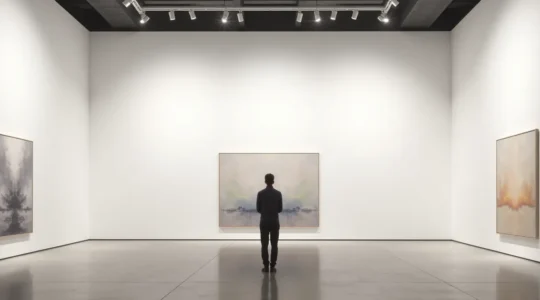
Separating Artist Biography from Artwork: When Does Context Matter?
The critical debate isn’t whether to use an artist’s biography, but how to recognize it as just one of many interpretive layers—or ‘overpaints’—applied to an artwork. It reveals how trauma narratives can dominate an artist’s legacy, as seen with Frida…
Read more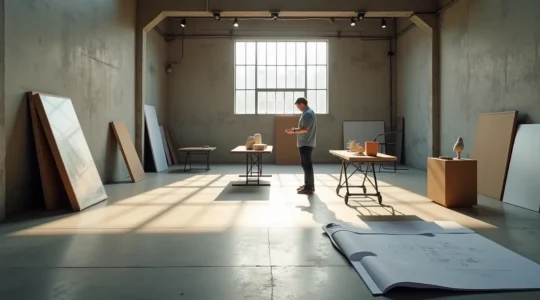
Organizing Pop-Up Art Shows: The Logistics Most New Curators Underestimate
A pop-up art show’s success hinges not on the creative vision alone, but on mastering the overlooked logistical details that create significant financial and operational friction. Standard liability insurance is dangerously inadequate for art; specialized coverage is non-negotiable. Venue selection…
Read more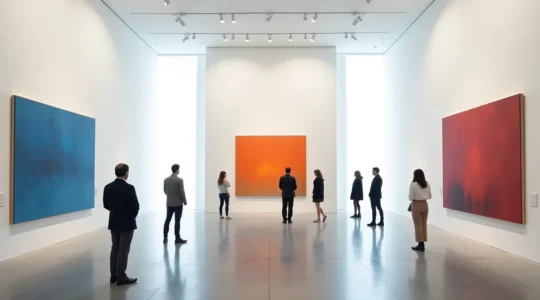
Beyond the Canvas: How Color Theory Architects Buyer Emotions in Modern Art Galleries
The sale of art is decided not by the object itself, but by the subconscious emotional environment you build around it. Color and composition are tools for psychological priming, not just aesthetic choices. They guide the viewer’s feelings and perceived…
Read more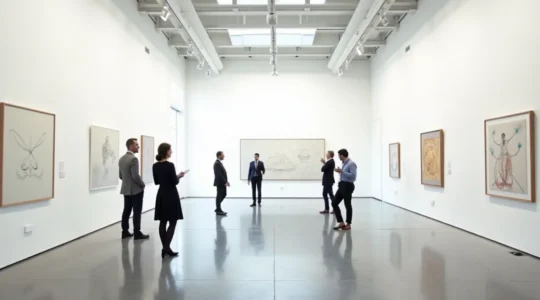
Investing in Emerging Artists: How to Spot Future Value Before Prices Spike?
The key to successful emerging art investment isn’t spotting raw talent, but decoding the market structures that manufacture value. An artist’s long-term value is more dependent on their gallery’s prestige than their inherent skill. Social media hype is often a…
Read more
The Chemistry of Art Restoration: Unlocking the Science to Save 500-Year-Old Canvases
Art conservation is not an act of erasing time, but a precise scientific negotiation with the molecular decay of historical materials. The yellowing of old paintings is a chemical reaction—the oxidation of natural resin polymers—not just a layer of dirt….
Read more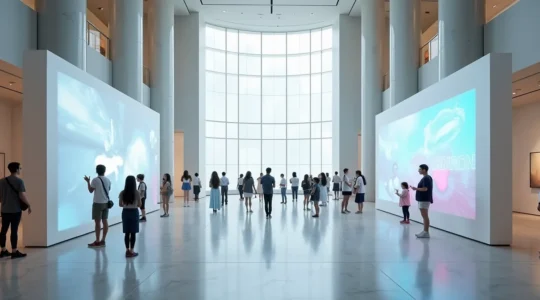
Why Modern Museums Are Shifting from Silent Halls to Interactive Spaces?
The key to boosting visitor engagement isn’t adding more technology, but redesigning the entire museum environment to align with visitor psychology. Successful exhibits reduce cognitive load through intentional lighting, spatial flow, and clear narratives. Operational choices, like dynamic pricing and…
Read more