Listen to music and sound
The world of music and sound encompasses far more than simply pressing play. Whether you’re sitting in a concert hall absorbing a live orchestral performance, selecting your first quality instrument, engineering sound for a stage production, navigating the complex landscape of music rights, crafting tracks in a digital workspace, designing ambient soundscapes for commercial environments, or optimizing your home audio setup, each dimension requires its own knowledge and skills. Understanding these interconnected domains transforms passive listening into active appreciation and informed participation.
This comprehensive exploration examines the critical aspects of engaging with music and sound across multiple contexts. From the etiquette and economics shaping classical music venues to the technical specifications determining headphone impedance matching, we’ll unpack the foundational concepts that empower both casual enthusiasts and serious practitioners. Each area presents unique challenges and opportunities that, once understood, deepen your relationship with the sonic world around you.
Experiencing Live Musical Performance
The live concert environment remains one of the most powerful ways to encounter music, yet it’s surrounded by evolving questions about accessibility, programming, and audience engagement. Understanding these dynamics helps both attendees and organizers create more meaningful experiences.
Breaking Down Concert Etiquette Barriers
Traditional concert etiquette—remaining silent between movements, refraining from applause until the conductor’s hands drop, dressing formally—can feel intimidating to newcomers. These unwritten rules, while rooted in historical respect for performers and fellow audience members, sometimes create an unwelcoming atmosphere that discourages broader participation. Modern approaches increasingly prioritize authentic engagement over rigid formality, recognizing that spontaneous appreciation can coexist with focused listening. Some venues now offer “relaxed performances” where families, individuals with sensory sensitivities, or first-time attendees can experience music without anxiety about breaking invisible codes.
Programming Philosophy: Classical Versus Pops
Concert programmers face constant tension between artistic integrity and audience appeal. “Pops” concerts—featuring film scores, Broadway selections, or popular music arrangements—attract different demographics than traditional classical programs. Effective programming doesn’t treat these as opposing forces but as complementary approaches. A well-curated pops concert maintains musical excellence while offering entry points for listeners unfamiliar with the standard repertoire. The challenge lies in avoiding condescension while making strategic choices about orchestration quality, genre mixing, and narrative theming that respects both the ensemble’s capabilities and the audience’s intelligence.
The Economics of Attendance
The subscription model versus single-ticket sales debate reflects deeper questions about financial sustainability and audience commitment. Subscriptions provide organizations with predictable revenue streams and cultivate loyal patrons who attend regularly regardless of specific programming. However, they can also exclude younger or less affluent music lovers who can’t commit to multiple events upfront. Single-ticket flexibility attracts spontaneous attendees and allows targeted marketing for specific concerts, but creates revenue unpredictability. Many organizations now experiment with hybrid models: mini-subscriptions, “choose your own adventure” packages, or dynamic pricing that adjusts based on demand while maintaining affordable access points.
Choosing and Caring for Instruments
For string players, the instrument represents both tool and investment. Understanding valuation, condition assessment, and market dynamics empowers musicians to make informed decisions throughout their development.
Understanding Instrument Valuation
A string instrument’s value derives from multiple factors: maker reputation, materials quality, historical provenance, and current condition. Bench-made instruments—crafted individually by skilled luthiers—typically command higher prices than factory-produced alternatives, though exceptional factory instruments can outperform mediocre handmade ones. The challenge for buyers is distinguishing genuine quality from marketing narratives. Provenance documentation, maker labels (which can be forged), and expert authentication all influence price, but ultimately an instrument’s worth is determined by its sound projection, tonal character, and playability.
Assessing Condition and Sound Quality
When evaluating an instrument in a shop, visual inspection reveals only part of the story. Check for cracks (especially in the top plate), open seams, and wear patterns that suggest either heavy use or poor setup. More critically, assess sound projection by playing in different parts of the room—a responsive instrument should fill the space without excessive effort. Listen for evenness across all strings and registers; dead spots or overly bright strings suggest setup issues or structural problems. The resale value depends heavily on maintained condition, making regular professional maintenance not just about playability but also about protecting your investment.
Timing Your Instrument Upgrade
Advancing students often wonder when to move from their starter instrument to something more sophisticated. The answer isn’t purely technical but involves multiple considerations:
- Your current instrument actively limits your progress (poor intonation, weak projection, or mechanical issues)
- You’ve committed to long-term study with consistent practice habits
- Your teacher confirms you’re ready to benefit from a better instrument’s nuances
- You have budget flexibility for both purchase and ongoing maintenance
Upgrading too early wastes resources on subtleties you can’t yet exploit; waiting too long can frustrate development. The right timing typically arrives when technical proficiency outpaces the instrument’s capabilities.
Capturing Sound: Microphones and Live Engineering
Live vocal reinforcement presents unique challenges that distinguish it from studio recording. Understanding microphone characteristics and common errors dramatically improves sound quality on stage.
Microphone Polar Patterns and Stage Applications
The choice between cardioid and supercardioid patterns fundamentally affects feedback management and monitoring on loud stages. Cardioid microphones reject sound from the rear while maintaining reasonable side rejection, making them versatile for many applications. Supercardioid patterns offer tighter front pickup and superior side rejection but have a small rear lobe of sensitivity—positioning monitors directly behind the performer invites feedback. On stages with high SPL (sound pressure levels) from instruments and monitors, supercardioid microphones provide better isolation, but only when monitor placement accounts for their specific rejection pattern.
The Proximity Effect and Frequency Management
When vocalists work close to directional microphones, the proximity effect creates an exaggerated bass boost—useful for adding warmth and intimacy, but problematic when excessive. Experienced engineers compensate through EQ adjustments, rolling off low frequencies to restore natural balance. More critically, identifying and cutting feedback frequencies requires precision: use a parametric EQ to sweep through the frequency spectrum during soundcheck, notching out problem resonances without destroying overall tone. This surgical approach preserves sound quality while maintaining system stability at higher volumes.
Common Microphone Handling Errors
Cupping the microphone grille—wrapping your hand around the top of the microphone—is perhaps the most common mistake among inexperienced performers. This hand position changes the microphone’s polar pattern unpredictably, creates muffled tone, and dramatically increases feedback susceptibility. Proper technique involves gripping the body below the grille, allowing the microphone’s designed acoustic properties to function. Similarly, optimized monitor mixes improve pitch accuracy by ensuring vocalists hear themselves clearly in the context of the ensemble, reducing the tendency to sing sharp or flat when struggling to self-monitor.
Protecting Your Music: Rights and Licensing
Independent artists navigating intellectual property often encounter confusing terminology and processes. Understanding rights structures protects your work and unlocks revenue opportunities.
The Split Between Writing and Recording
Music copyright actually involves two distinct rights: the composition (melody, lyrics, chord progressions) and the sound recording (the specific captured performance). These can have different owners. When you write and perform your own song, you potentially control both, but if a producer significantly shapes the recording, they might negotiate a share of the recording copyright. Understanding this distinction becomes critical when registering works, negotiating splits with collaborators, and collecting royalties from different income streams.
Performance Rights Organizations and Registration
Joining a PRO (Performance Rights Organization) allows you to collect royalties when your compositions are publicly performed—broadcast on radio, streamed, played in commercial venues, or performed live. The registration process requires documenting your works with accurate metadata: title, writers, publishers, and percentage splits. Timing matters: register songs before they receive significant airplay to avoid missing royalty collection periods. Different territories have different PROs, and international agreements allow for worldwide collection, though some writers engage sub-publishers in key markets for more aggressive representation.
Sync Licensing and Sample Clearance
Synchronization licensing—placing your music in film, television, advertising, or video games—can provide substantial income and exposure. Unlike performance royalties, sync deals are negotiated individually, with fees varying wildly based on usage prominence, project budget, and term length. Conversely, using uncleared samples in your own recordings carries significant legal risk. Even short samples require clearance from both the composition owner and the sound recording owner. Many emerging producers have faced expensive lawsuits or been forced to remove tracks from distribution because they incorporated samples without proper licensing, demonstrating that preventive clearance is always cheaper than reactive settlement.
Creating Music: Production Workflow Essentials
Efficient music production balances creative spontaneity with technical organization. Smart workflow optimization accelerates the journey from initial idea to finished track.
Digital Audio Workstation Organization
Well-organized sample libraries and plugin collections save countless hours otherwise lost to searching through disorganized folders. Establish a consistent hierarchical naming system: categorize by instrument family, then subcategorize by articulation or timbre. Many producers use color-coding in their DAW to instantly identify track types—drums, bass, harmony, vocals, effects. This visual organization speeds navigation during creative flow states when stopping to hunt for sounds interrupts momentum.
Template Setups and Automation
Creating project templates with pre-routed tracks, commonly-used plugins inserted, and basic mixing buses configured eliminates repetitive setup work. A well-designed template gets you to the creative phase within seconds rather than minutes. Similarly, mastering automation editing speed—whether through keyboard shortcuts, mouse modifiers, or control surfaces—transforms mixing from tedious detail work into expressive performance. Modern DAWs offer multiple automation modes (read, touch, latch, write) that, when properly understood, allow nuanced dynamic control without constant redrawing of curves.
Stock Plugins Versus Third-Party Tools
The debate between using DAW-included stock plugins versus investing in third-party alternatives often generates more heat than light. Contemporary stock plugins are remarkably capable—the EQs, compressors, and reverbs included with major DAWs can achieve professional results in skilled hands. Third-party tools sometimes offer more intuitive interfaces, specific sonic characteristics, or specialized functions not available stock. The wisest approach prioritizes mastering your stock toolset before purchasing alternatives, ensuring you’re acquiring solutions to actual limitations rather than collecting plugins as procrastination. One exception: ignoring loudness standards (like LUFS targets for streaming platforms) is a genuine error that no plugin collection compensates for—proper gain staging and loudness metering should be fundamental to every project.
Environmental Sound Design
Strategic sound design in commercial and public spaces subtly influences behavior, emotion, and even purchasing decisions. This specialized field combines psychology, acoustics, and cultural awareness.
The Psychology of Tempo and Sound Selection
Research consistently demonstrates that musical tempo affects dwell time in retail environments—slower tempos encourage browsing and lingering, while faster music accelerates movement. Restaurants manipulate this by playing upbeat music during peak hours to increase table turnover, then switching to relaxed selections during slower periods to encourage longer stays and additional orders. The choice between natural sounds (birdsong, water, wind) and synthetic loops depends on the desired atmosphere and authenticity perception. Natural sounds typically create calming environments suited to wellness spaces, while carefully produced electronic soundscapes can reinforce modern, innovative brand identities.
Acoustic Privacy and Volume Consistency
In open-plan offices, deliberate sound masking protects speech privacy by introducing ambient noise that makes conversations unintelligible beyond a few meters. This approach differs from simple background music—specialized masking systems generate frequencies specifically chosen to interfere with speech comprehension without creating distraction or annoyance. Success requires consistent volume levels throughout the day; sudden shifts draw attention and break the acoustic consistency that allows people to mentally tune out the background. Playlist sequencing for time of day should account for energy level needs—gentle morning music transitioning to more energetic afternoon selections, then winding down toward closing—while maintaining volume uniformity that prevents jarring transitions.
Optimizing Your Home Listening Experience
Audiophile culture often obscures practical truths about home audio quality. Understanding signal chain basics and separating genuine improvements from marketing myths leads to better sound without unnecessary expense.
The Digital-to-Analog Converter’s Role
Every digital audio source requires a DAC (digital-to-analog converter) to transform binary data into electrical signals that drive speakers or headphones. Your smartphone, laptop, and streaming device all contain DACs, though quality varies considerably. External DACs potentially offer superior conversion accuracy, lower noise floors, and better power supply isolation than built-in alternatives. However, the audible difference depends on your existing equipment’s quality—if you’re using modestly-priced headphones or speakers, upgrading the DAC likely produces minimal improvement. The signal chain’s weakest link determines overall quality, making balanced investment across all components more effective than obsessing over any single element.
File Formats: Lossless Versus High-Bitrate Compression
The debate between lossless formats (FLAC, ALAC, WAV) and high-quality compressed formats (320kbps MP3, AAC) generates passionate arguments, but controlled listening tests reveal that most people cannot reliably distinguish between them in blind comparisons. Lossless formats preserve perfect bit-for-bit accuracy of the original recording, which matters for archival purposes and provides headroom for processing. High-bitrate lossy compression discards information psychoacoustically determined to be inaudible, dramatically reducing file sizes. For casual listening on typical consumer equipment, 256kbps AAC or higher delivers transparent quality. Invest in lossless if storage isn’t constrained and you value theoretical perfection, but recognize that recording and mastering quality affects your listening experience far more than format choice.
Impedance Matching and the Cable Myth
Matching amplifier output impedance with headphone impedance ensures optimal power transfer and damping factor. The general rule suggests amplifier output impedance should be at least 8 times lower than headphone impedance, though this varies with headphone design. Mismatched impedance can result in insufficient volume, altered frequency response, or poor dynamic control. Conversely, the notion that expensive digital cables improve sound quality remains one of audio’s most persistent myths. Digital signals are binary—the data either arrives intact or doesn’t. Unlike analog cables where resistance, capacitance, and shielding affect signal integrity, digital cables simply need adequate construction to prevent data errors. Any properly-built digital cable, regardless of price, delivers identical performance.
Room Acoustics and Speaker Placement
Room acoustics affect sound quality more dramatically than most equipment upgrades. Parallel walls create standing waves that emphasize certain frequencies while canceling others, resulting in uneven bass response. Speaker placement relative to walls, listener position, and room dimensions determines what you actually hear. Basic optimization strategies include:
- Positioning speakers away from corners to reduce excessive bass reinforcement
- Creating an equilateral triangle between speakers and listening position
- Ensuring tweeters aim toward the listener at ear height
- Adding absorptive materials at first reflection points to reduce echo
- Experimenting with slight position adjustments while playing familiar material
These free or low-cost interventions often yield more noticeable improvements than expensive component upgrades, yet they’re frequently overlooked in pursuit of technological solutions to acoustic problems.
The journey through music and sound encompasses technical knowledge, practical skills, and aesthetic sensitivity across remarkably diverse domains. Whether you’re cultivating audiences for live performance, selecting instruments that will serve you for decades, engineering pristine sound reinforcement, protecting your creative rights, streamlining production workflows, designing spaces through sonic atmosphere, or refining your personal listening environment, each area rewards curiosity and informed decision-making. The interconnections between these fields reveal that excellence in music and sound ultimately rests not on mastering isolated techniques, but on understanding how context, purpose, and human perception shape every sonic encounter.
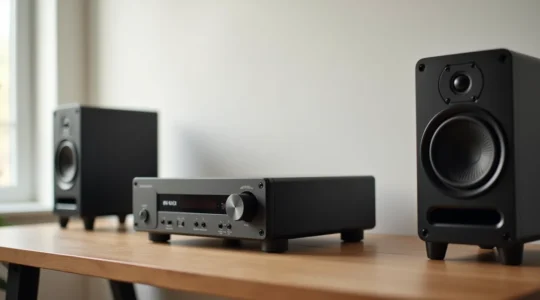
Building a Hi-Fi Signal Chain: Where to Invest Your Budget First?
The greatest audible improvements in a digital Hi-Fi system come from diagnosing and eliminating signal bottlenecks, not from expensive component upgrades alone. Your computer’s internal sound card is likely the first and most significant source of quality degradation due to…
Read more
How to Design Retail Soundscapes That Increase Sales?
Effective retail sound design isn’t about background music; it’s a form of behavioral architecture that actively sculpts the customer experience to drive revenue. Slower tempos and nature-based sounds demonstrably increase dwell time and spending by reducing cognitive load and anxiety….
Read more
Logic Pro vs. Pro Tools: Which DAW Streamlines Sound Design Workflows?
The choice between Logic and Pro Tools isn’t about features; it’s a commitment to a workflow philosophy optimized for either creative iteration or delivery precision. Pro Tools excels in granular editing efficiency (Smart Tool) and ecosystem integration (Soundminer), which are…
Read more
Registering Music Copyrights: The Critical Business Steps Most Indie Composers Skip
In summary: Your music generates two distinct copyrights (the composition and the master recording), which create separate revenue streams. Timely registration with the U.S. Copyright Office is not just for protection; it unlocks powerful legal remedies like statutory damages. Long-term…
Read more
Microphone Techniques for Powerful Vocals in Poorly Acousticed Venues
Your vocals sound muddy and feedback-prone in difficult rooms not because of your gear, but because of misunderstood physics. The solution isn’t more expensive equipment, but mastering how your microphone interacts with its environment. By understanding concepts like the proximity…
Read more
Vintage vs. Modern Violins: Which Offers Better ROI for Students?
The true value of a student violin lies not in its age or label, but in its structural health and acoustic honesty. Severe damage, like a repaired bow crack, can erase up to 90% of an instrument’s value, far outweighing…
Read more
Attracting Millennials to Symphony Halls: Strategies That Actually Work
Filling your concert hall with younger audiences requires a fundamental shift from selling tickets to designing a complete social and digital experience. Lowering barriers to entry, such as rigid dress codes and traditional subscription models, is the critical first step….
Read more